Friday, December 12, 2008

Roses in April?

Did you know?

“Every two seconds someone in the U.S. needs blood.”(1) “This results in the need for more than 38,000 blood donations every day.”(2)

“On any given day, more than 6,000 men, women and children desperately search the National Marrow Donor Program (NMDP) Registry for a matching bone marrow donor. These patients have leukemia, lymphoma and other life-threatening diseases that can be treated by a bone marrow transplant.”(3)

After the breakdown and euthanasia of Eight Belles in the shadow of the Kentucky Derby, the sport, “…has come under heightened public scrutiny…” and “…needs to take drastic action to reverse a very disturbing trend toward open criticism of horse racing for our perceived cruelty,” according to NTRA CEO Alex Waldrop.(4) His blog entry concerning the aftermath of Eight Belles received 803 unique comments.

These statements made up the opening paragraph to a proposal that went out today to Santa Anita Park and the NTRA about preforming a blood drive and bone marrow registry during next year's Santa Anita Derby. The proposal already received initial approval after a phone conversation with the track's marketing department. The idea behind the program is pretty simple. Make horse racing look good and help a lot of people while doing it. Its a direct response to the last two pages of the NTRA Online Task Force's 48 page document released in September at this year's NTRA Marketing Summit. The document is available in its entirety here.

Recently horse racing has been upping the ante in showing that its more than what some call a "cruel sport". Pat Day will be auctioning an autographed saddle at Ellis Park on the 13th to raise aid for the horsemen who were involved in the November 20th fire at Riverside Downs that killed 30 horses. Late in November, Churchill Downs put on a food drive for the Thanksgiving holiday. Events like this should be a staple in our sport because every one of them that happens improves our sport's public image.

Do we need to improve our image? Very much so. While attending the NTRA Marketing Summit in Las Vegas there was a quietly held meeting where the impact of Eight Belles was discussed in the way of statistics. The numbers are frightening. Of people surveyed following the 2008 Kentucky Derby, only 27% gave the sport a "favorable" rating. The NFL received a 74% favorable rating. Illegal dog fighting anyone? The MLB received a 57% rating. Steroids? Clemens fiasco? The NBA was given a 43%.

So where does a 27% rating place us? According to the speaker thoroughbred horse racing is equivalent in approval rating to boxing and ultimate fighting. For those unfamiliar with the recent explosion in ultimate fighting, the 'sport' involves putting two men in a wire cage and watching them beat one another senseless until one goes unconscious or submits. From the few minutes I've seen during a lecture in grad school, the two roll around in their own blood in body locks trying to punch one another in the kidneys. To think that horse racing is considered on the same level of this 'sport' is troubling.

Other notes taken from the meeting include the following: 33% surveyed believe our sport has integrity. Of a similar survey conducted in 2007, this number was 41%. The speaker said that an 8 point drop of integrity has never been seen in any sport before. He continued to say that in the last two months (July-August) 25% of core racing fans think the sport has gotten worse. For those who are concerned only with handle, the speaker reported that the impact of Eight Belles has been a 5% decrease in wagering, or $1.1 billion dollars.

I won't belabor the point. Rather I'll just say we need to start doing something fast to improve our sport's image or we won't have a sport left. Will "Roses in April" do that? I'll give you 100-1 that it will.

Perseverance!

Sunday, December 7, 2008

Under Exposed

After great internal deliberation I decided to not run for a position on the board of directors for the Thoroughbred Owners of California. I was really considering it because I thought I could make a real difference for the game. I was willing to go above and beyond but the reality is I am "under exposed" and would have "no chance" in the voting process, or so I was told. Here's the skinny (pun intended):

In doing due diligence for the position I spoke to and emailed a lot of different people ranging from owners, trainers, to an industry leader (NTRA CEO Alex Waldrop: Yes, he answers his e-mail). Pretty much everyone said the same thing, I didn't have enough "exposure". And they all said, "you would not win". Period. Final answer? Final answer, Regis. I spoke to them about some ideas I had in getting more votes but they all where quite firm. No chance. Nada.

As they explained voting for the TOC Board of Directors "primarily involves name recognition". Well when you look at the incumbents and their accomplishments you see things like, "owner of Grade-1 horse X" then its pretty hard to compete. As one owner explained to me voters (CHRB licensed individuals) assume that because someone owned a Grade-1 horse then they must know how the business works. Do they? Just because someone purchased or claimed a horse that turned out great doesn't mean they are good for a management position. Maybe the horse won because the trainer did something amazing? Or maybe the horse just had a once in a lifetime performance? We all know the game is a lot of luck.

What the sport really needs are people who are willing to put the time in and make the effort to improve things. The old roll up your selves type who make compromises on major issues, push for change, and put the the sport's welfare first over personal issues. Right now I feel like the board is a "Who's Who" not a "Does Do" group of individuals. Why should someone who wants to really make a difference have to be locked out because they aren't well do to horse wise?

Fortunately positions come available every year. So maybe in twelve months things will be different concerning my amount of "exposure". It's a quirky game; so you never know.

As always... PERSEVERANCE!

Saturday, December 6, 2008

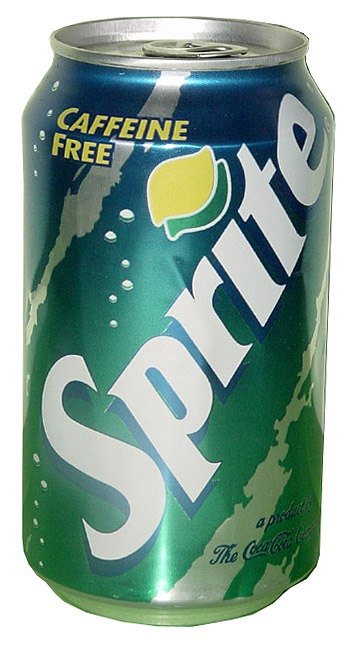
Image IS Everything

Image is nothing.
Thirst is everything.
Obey your thirst.

Actually Sprite guys, image is everything. Turn on the television and you'll see that such a statement is an absolute truth in American culture. There are shows on television such as "What Not To Wear" and "How To Look Good Naked" that are devoted to nothing but appearances. Of course there are all sorts of fashion magazines such as Cosmopolitan, Elle, and Vogue devoted to splashing huge glam shots in an attempt to sell appearances. In 2007 Americans spent 50 billion on cosmetics and another 13 billion more on cosmetic surgery. Meanwhile approximately 15 billion was wagered on thoroughbred racing.

Why is image so important? Because many people do "judge a book by its cover". When Eight Belles broke down the industry took a huge black eye on the world's stage. People who do not pay any attention to thoroughbred racing 364 days of the year watch one race and one race only. And what did they see? A horse that ran 2nd in the nation's most popular race break down on the track. What else do they see during the Triple Crown season? Well during the Preakness there is drunken revelry in the infield. Also, do you remember that one zany "fortune teller" who predicted Brother Derek to win because he saw a peacock in his dreams. He had a tent, ball, robes... the whole enchilada. Seeing images likes this it makes sense when the casual follower of racing begins to wonder if those involved in the sport are degenerates of one degree or another.

Well the state of Louisiana took a step in the direction of "image" by banning steroids starting in January (here). While they are not the first, this is another movement in the right direction for the sport. Eventually if we can eliminate steroids in all juristictions then the next step would be to crack down on more medications, eventually eliminating them all together.

I would love for every state to ban all medications. Primarily because of "image". The general public is not familiar with nor can distinguish between useful drugs such as Lasix and harmful ones like cobra venom. To them a drug is a drug and the term drug usually is cast in a negative light. Also there is a lot of conflict over whether medications are beneficial to horses. Years ago the equine population did without and during those times we had some great horses with long careers. These days it seems that horses are very fragile. Opponents of medications such as Lasix point out that horses that would have failed on the track years ago are now winning major races and are becoming breeding magnets thanks to modern veterinary medicine. Consequently all their offspring are prone to be in need of drugs as well. This "weakening of the breed" argument makes a lot of sense to this scientist.

Most trainers I have spoken with say that if they had to go to an oats and water only regime they would be perfectly fine with that. I think most handicappers would as well. Who hasn't wondered when a 20-1 comes up and blows the rest of the field away if something going on. I have spoken to Del Mar's customer relations and they indicated that a lot of negative mail comes through when longshots score huge. Also what images the term "Supertrainer" bring to mind? Aren't drugs usually used in reference to Supertrainers? Most other racing countries such as Japan, the UAE, and Europe have very strict medication rules. Why are we as a racing nation so far behind the curve?

Perseverance!

Monday, November 24, 2008

Ohio Caught In Crossfire

The Bloodhorse reports (here) that the Ohio State Racing Commission has removed 160 days of racing in the state by eliminating winter racing at Beulah Park and the spring/summer meet at River Downs. I can't say that I am surprised. In an economy where banks are being closed, share prices have been cut in half, and unemployment is soaring, it makes sense that the thoroughbred product is being trimmed as well. What is unfortunate however is that one locality has to bear the brunt of the cut. It would make more sense that the loss be shared nationally by all tracks by everyone dropping one day to a four day or three day racing schedule thereby immediately reducing the total racing product. As it stands there is simply too much racing for what handle remains. Tracks have fixed costs to open their doors and by eliminating a day means a reduction in overhead. Fewer races also mean that the horse population has to squeeze into larger fields resulting in larger pay outs for bettors. To horsemen it means fewer choices in conditions so less sandbagging and more competition in the claiming box as horses have to drop down or sit out. To the general public racing becomes less frequent and therefore more noteworthy when it does occur.

The loss of dates however occurred because of the wrong reason, squabbling over ADW revenue. I have to side with the tracks on this issue. Simulcasters have the least overhead but take the lion's share of the take out. Simulcasters are the few entities in this sport who do well in relation to what they provide which is mainly a chair, a television, and someone to collect the wager. (Those who visit some of these simulcasters even argue that you don't even get a chair as the facilities are that dirty and run down.)

Let's face it simulcasters have a sweet deal and they aren't about to give it up. I can't see the simulcasters ever agreeing to a fee structure that actually represents what their costs are and then providing an adequate return. The only way to circumvent this conflict is to eliminate it all together by having the tracks take ownership of their state's hubs or having a national entity take ownership of all the simulcasting platforms whether they are online, television, or brick and mortar. By eliminating the middle man revenue can be retained and disbursed appropriately as the simulcasters would then function at cost to the tracks, funneling the rest into the purse structure or into other initiatives such as take out reduction, wagering rewards, or into financial incentives to keep fan favorites racing longer.

Perseverance!

Sunday, November 16, 2008

Right Step Right Direction

This weekend Churchill put on a pair of events here and here to help several charities as well as to bring further awareness to breast cancer. I for one am glad to see things like this happen. Unfortunately neither article made any hint of what effect these two days had for attendance and handle which many tracks view as the immediate reward for their efforts. A lot of marketing departments are under significant pressure these days to put more fans in the seats and more dollars in the auto totes all while on tight budgets.

For those not familiar the NTRA Online Task Force put together a large document that was presented at the September NTRA Marketing Summit in Las Vegas. At the end the group put a strong emphasis on charity work. The reason for this is several fold. First, many members of the millennial generation are very interested in doing good and are supportive of those who make such efforts. Second, in light of all the negative press we have received this year showing what good the sport can create helps cast ourselves in a better light.

Where tracks need to focus their charity efforts is in their local communities. Wal-Mart makes a major point about affecting the neighborhood and then promoting it so that the public knows. It helps deflect all the flak they take over how they utilize their employees. Tracks should do the same, focusing on community projects that target the low income neighborhoods. Why low income? Groups such as Focus on the Family point out that the majority of those who gamble heavily are among the poorest in our population. It would make since then to return some of that money to our sport's most frequent customers in the form of food drives, neighborhood clean ups, and park and school yard improvements. Additional ideas would include health fairs to educate and blood drives with bone marrow registry to share and improve quality of life.

Do ideas like this cost a lot of money? In reality they do not. Many tracks are already very generous with complementary admissions. Giving them out in food or blood drives makes sense. Clean ups and other neighborhood improvements usually are very time demanding but financially speaking are low cost especially if places like the Home Depot are willing to donate supplies. The workforce for these events could easily come from the current fan base.

When you step back and take a look at it, charity efforts with a community bent is a win win situation for everyone.

Perseverance!

Sunday, November 9, 2008

$2 WAMPQ to Win

The reality with horse racing is that unless you are exceptionally lucky then the likelihood of your horses paying their bills is troubling. While there are no published statistics on thoroughbred investments from my experiences as an owner about 90% of horses in a given year fail to earn enough to pay their way. And while every racing circuit is different cost wise you can expect to pay around $48,000 a year to keep a So Cal horse racing on the major SA-HOL-DMR circuit. Needless to say the majority of horse owners use other ways to fund their passion for the sport.

If you hang around the exotic players long enough you are going to hear one of them says, "If I hit this pick-6 I'm gonna git mahself a horse!" Problem is how likely is that? There are many out there who play the pick-6 for years before hitting one. Those who hit more often usually play a deep ticket that gets ridiculously expensive. Mind you how many of those 1K tickets end up missing by one race? Consider also that there's a 25% take out. So on your $400 ticket, $100 goes right out the window. Finally if you are fortunate enough to hit then expect the IRS to take their cut of 25% immediately. All in all winning your next horse through wagering is a tough row to hoe. Is there another way?

Last Friday morning I decided to take my wagering bankroll for the quarter and try my hand at a different exotic wager. Let's call it the Wall Street Pick-6. I ended up playing a cold single by selecting a stock in chapter 11 bankruptcy. Chapter 11 is a reorganization situation where a company may or may not remerge as a profitable entity. Statistics are that 99% of companies fail to come out of Chapter 11. So our "horse" WAMPQ is effectively 100-1 (Arcangues anyone?).

Am I crazy? Probably so but let's consider a few things. First off there's no take out with this wager though it did cost $8.95 to place it through my online broker. During intraday trading on Friday WAMPQ win tickets were $2 a piece. I ended up putting $400 to win on WAMPQ which is equivalent in price to a 1x4x5x5x2x1 $2 Pick-6. Two singles? Wow that's brave. Some might even call it crazy. So which is a better wager?

Let's say the pick-6 we hit was the Ultra Pick-6 out of Santa Anita on Breeder's Cup Saturday. That pick-6 paid around $56,000. I think most would agree that's a score of a lifetime. What about lowly WAMPQ? Surprisingly enough if the "horse" should win then the $2 to win will pay $1,000 (WAMPQ is a convertible preferred security that liquidates at $1,000 if the issuing company defaults, which has occurred). And that two hundred times over is $200,000. If a horse's true odds are 100-1 and it’s going off at a price of 500-1, isn't that an overlay to consider? Arcangues won at 133-1 so anything is possible you know. So here's this gambler hoping that WAMPQ can get the distance. If that's the case I'll see you in the winner's circle.

Perseverance!

Infield Potatoes

That was going to be the original name for this blog however upon further review I began to wonder how many spud defying jokes one could handle. There's also the fact that I reside in Southern California which is a long way from Idaho. Finally you have to wonder if anyone would take my french-fried, scalloped, al gratin mash seriously with such a title. So as interesting as Churchill Downs growing 1000 bushels of russets in the 1918 infield may be one should pick a name with a little more due diligence.

Unfortunately all the really good racing related names are spoken for already (all the easy ones anyhow). So I considered something a bit more outside the gate such as "Vanned On" but then figured it would be seen as pretty tasteless by some. "Left at the Gate", "Three Wide", and "Riders Up" all passed through my consciousness but in the end I settled on "The Commissioner" which does not seem very horse related at all. Cue the explanation...

The blog's title spawns from two executives playing with Blackberries in the middle of a mini presentation I was giving at the recent NTRA Marketing Summit at Las Vegas in September. As the story goes I was talking about regulating thoroughbred partnerships when John Della Volpe of Social Sphere messaged Keith Chamblin of the NTRA saying "There's the first commissioner of horse racing." John mentions this briefly on his blog here.

Well as unlikely as my becoming the first commissioner of horse racing may be it makes for an interesting enough title. And to those who mislabeled me at the summit as a "Blogger" it looks like you are all now correct.

Perseverance!